The Social Model of Disability

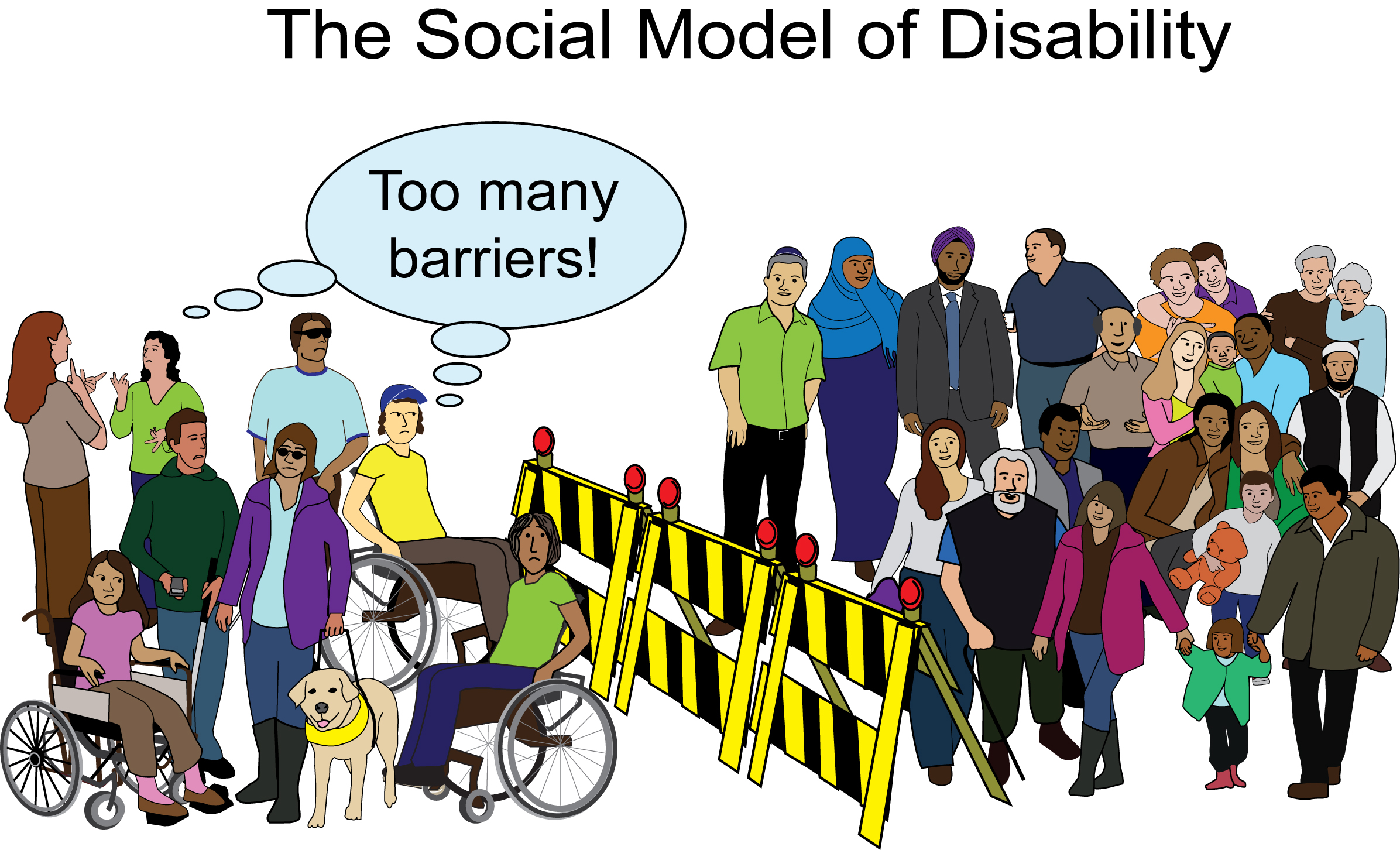
At X by X Bromley, we believe in the Social Model of Disability. This model or way of thinking was developed over the last 50 years by Disabled people. 

Social model of disability

The Social Model states that people with impairments or differences in their mind or body are ‘disabled’ by barriers in society which exclude and discriminate. 

These barriers stop Disabled people from taking part in society in the same way as non-disabled people. 

Medical model of disability

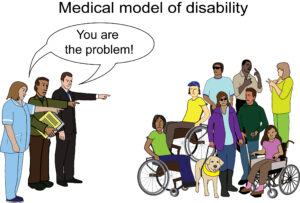
This is different to the Medical Model of Disability, which says people are disabled by their impairments or differences. 

The Medical Model looks at what is ‘wrong’ with the person, not what the person needs, suggesting that the problem is with the Disabled person. 

We believe it is barriers in society that stop Disabled people from living our lives as we choose, not our impairments or differences. 

We work to challenge these barriers that Disabled people face, including:

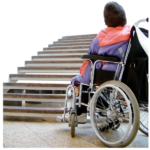
Person in a wheelchair facing a long flight of stairs.
Physical barriers that prevent equal access, such as stairs/steps, kerbs and inaccessible toilets
Attitude
Attitudinal or social barriers that assume a Disabled person can't do something because of their impairment
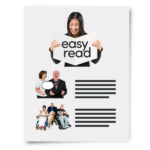
Document with a smiling woman holding it open, titled 'easy read,' featuring photos of people conversing and individuals with a service dog.
Information and communication barriers, such as no Easy Read or British Sign Language interpretation
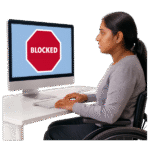
Woman in wheelchair at a computer with a blocked message on the screen.

Organisational barriers

These are policies, procedures, or systems within services, workplaces, or institutions that exclude or disadvantage Disabled people.

Examples:

  1. No reasonable adjustments – e.g. refusing flexible hours or remote access.
  2. Inaccessible booking systems – only offering phone or online options.
  3. Excluding Disabled voices – not involving Disabled people in service design or decision-making.
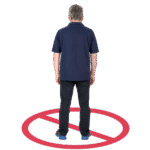
Person standing with back to viewer inside a red no entry symbol.

Structural barriers in society

These are systemic issues in wider society, such as laws, funding models, and national policies that create inequality for Disabled people.

Examples:

  1. Insufficient disability benefits – forcing many to live in poverty.
  2. Lack of accessible housing – national policy doesn’t require enough suitable homes.
  3. Exclusion from civic life – inaccessible voting, consultations, or public services.

Deaf Cultural Model

BSL symbol

We support the Deaf Cultural Model. This is another social model way of thinking used by many people within the British Sign Language (BSL) community. 

People within the community identify as a linguistic minority with shared culture, experiences, histories and sign language, and use the term Deaf to demonstrate their campaign for cultural and linguistic recognition. 

We recognise that there are different communication needs, including BSL, lip reading, electronic note taking, etc. We aim to ensure that we provide support to meet different communication needs.

Neurodiversity Movement

Neurodiversity

We recognise the growth of the Neurodiversity Movement. 

Led originally by autistic people, this movement has come to include people with all sorts of differences in learning, mental processing, sociability, attention or mood. The movement argues that everyone’s brains work differently or are neurodiverse. 

Our differences are an advantage in some situations and a disadvantage in others. That is a natural part of human variation. 

This Movement challenges the way that society classifies some brain differences as a problem. 

People in the movement use the term “neurodivergent” to describe those of us whose brain differences sit outside current social standards of “normality”. Barriers are experienced because environments and processes are designed for the neurotypical majority.

12 Pillars of Independent Living

From a Social Model perspective, to enable Disabled people to achieve genuine independent living requires a range of support to be in place to counter the effects of discrimination and oppression.

These are known as the 12 Pillars of Independent Living, which are:

Three smiling healthcare professionals holding a sign with an information symbol.
1. Appropriate and accessible information
Various British banknotes and coins arranged together.
2. An adequate income
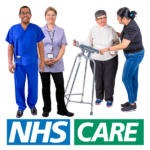
Group of healthcare professionals assisting an elderly woman with a walker.
3. Appropriate and accessible health and social care provision
Photo of a red double-decker bus, a modern train, a black taxi, and a red van with an open ramp.
4. A fully accessible transport system
Two women sitting on the grass, smiling and talking, with a person in a wheelchair on a path in the background.
5. Full access to the environment
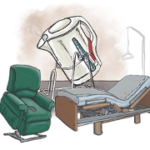
Aids and adaptations
6. Adequate provision of technical aids and equipment
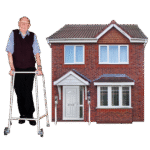
Elderly man with a walker standing next to a model of a red brick house.
7. Availability of accessible and adapted housing
A man in a wheelchair and a woman kneeling beside him, both smiling and interacting happily.
8. Adequate provision of personal assistance
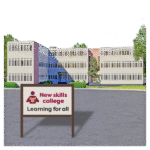
New Skills College building with a sign in front reading 'New skills college - Learning for all'.
9. Availability of inclusive education and training
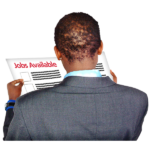
Jobs
10. Equal opportunities for employment
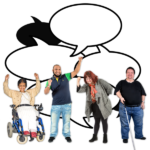
Four diverse individuals, three standing and one in a wheelchair, raising their hands in front of speech bubbles.
11. Availability of independent advocacy and self-advocacy
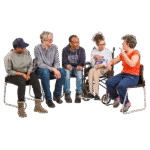
A diverse group of five people sitting and talking together, with one person in a wheelchair.
12. Availability of peer counselling